Case studies / Four ways capability becomes useful

Different problems.
One operating approach.

See how AKRD turns disconnected information, specialized knowledge, and unclear customer journeys into systems people can understand, inspect, and act on.

Completed work, working AKRD products, and active civic work are labeled separately so you can judge every example accurately.

37 + DCU.S. markets reached
$7.5M+Confirmed customer project value
41Field projects mapped
Under 5 yearsFrom market entry to national field proof

The method behind the work

Start with the real decision—not the requested deliverable.

A website, dashboard, operating system, or planning tool becomes valuable when it helps someone understand the problem and move forward with confidence.

  1. 01Find the real problem

    Identify where customers, teams, or decision-makers are losing clarity or momentum.

  2. 02Connect the information

    Bring the useful evidence, specialist knowledge, and operating context into one path.

  3. 03Build the experience

    Turn the logic into a usable system, journey, or decision-support product.

  4. 04Make proof understandable

    Show what is verified, assumed, simulated, unfinished, or still dependent on future results.

  5. 05Move toward action

    Give the buyer or team a clearer next decision instead of another disconnected artifact.

Choose the problem closest to yours

Four stories. Four different starting points.

Use the categories to jump to the kind of challenge you are facing. Each story explains what was built, why it matters, and how the underlying capability can transfer to another organization.

Completed transformationFinished work with demonstrated changes

Working AKRD productA functioning product shown with labeled demonstration data

Active civic/board buildIndependent work in progress, not a paid engagement

Private planning productIllustrative inputs demonstrate behavior, not customer results

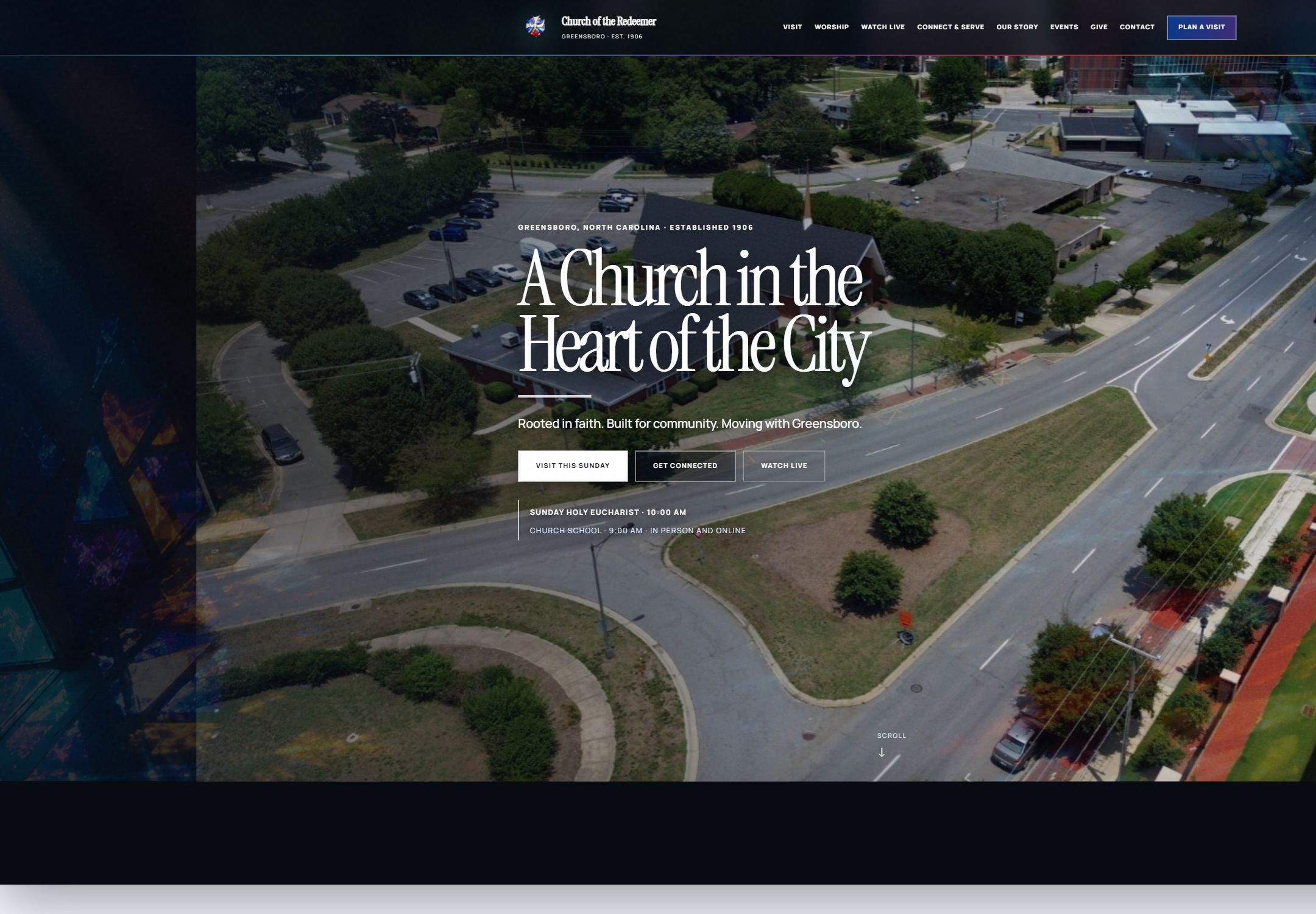
Redesigned Church of the Redeemer homepage with clear visitor actions and responsive navigation
Digital transformationA clearer welcome people can act on.
Completed transformation

Church of the Redeemer

Turn a difficult website into a clear visitor journey.

The problem
Important information and identity existed, but mobile visitors and first-time guests had to work too hard to understand the church and choose a next step.
What was built
A responsive redesign organized around real visitor questions, clearer page hierarchy, accessible navigation, stronger storytelling, and action-focused pathways.
Why it matters
When people can orient themselves quickly, the organization has a stronger foundation for visits, participation, giving, and future measurement.
What it proves
AKRD can uncover the value already inside an organization and build a digital experience that makes that value easier to understand and act on.

Useful for: organizations with a dated website, confusing navigation, scattered information, or a customer journey that no longer reflects who they are.
Read the full case storyDiscuss a similar problem ↗
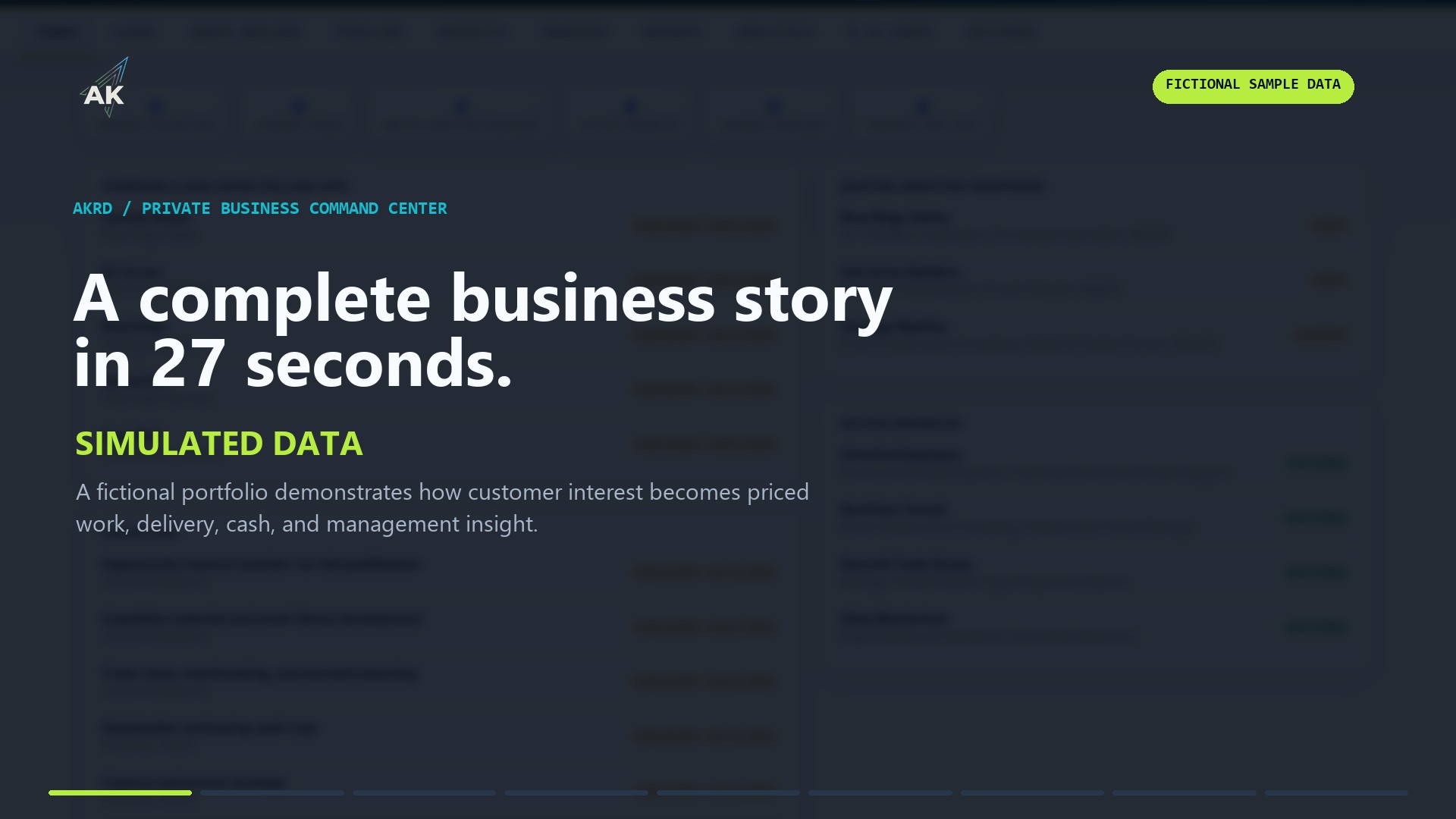
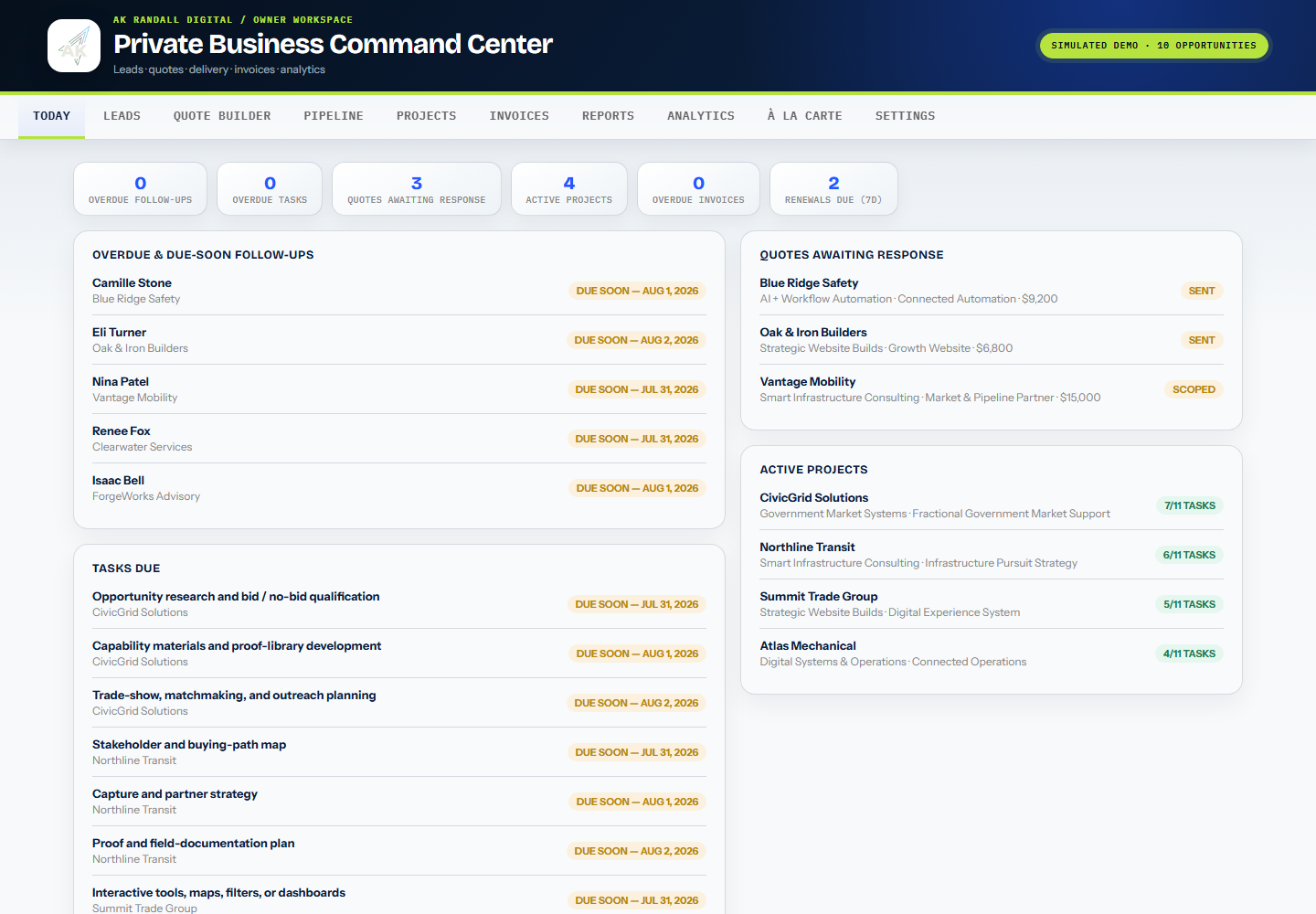
Business Command Center product walkthrough using a clearly labeled fictional operating scenario
Connected business operationsOne operating path from lead to learning.
Working AKRD product

AKRD Business Command Center

Keep the customer story intact across every handoff.

The problem
Lead details, pricing, project delivery, invoices, follow-up, and reporting can live in separate tools, forcing an owner to rebuild context before making the next decision.
What was built
A working owner workspace connecting lead management, qualification, quoting, pipeline, projects, invoicing, renewals, reports, and website activity.
Why it matters
A connected operation can reduce searching, repeated entry, missed follow-up, and decisions based on partial information.
What it proves
AKRD can translate the way a business actually works into a practical operating system rather than adding another isolated application.

Useful for: service businesses, contractors, consultants, and growth teams whose customer and delivery information is scattered across tools or people.

Demonstration boundary: all public companies, contacts, opportunities, transactions, and performance figures are fictional. They demonstrate working product behavior—not AKRD or customer results.

Read the full case storyDiscuss a similar problem ↗
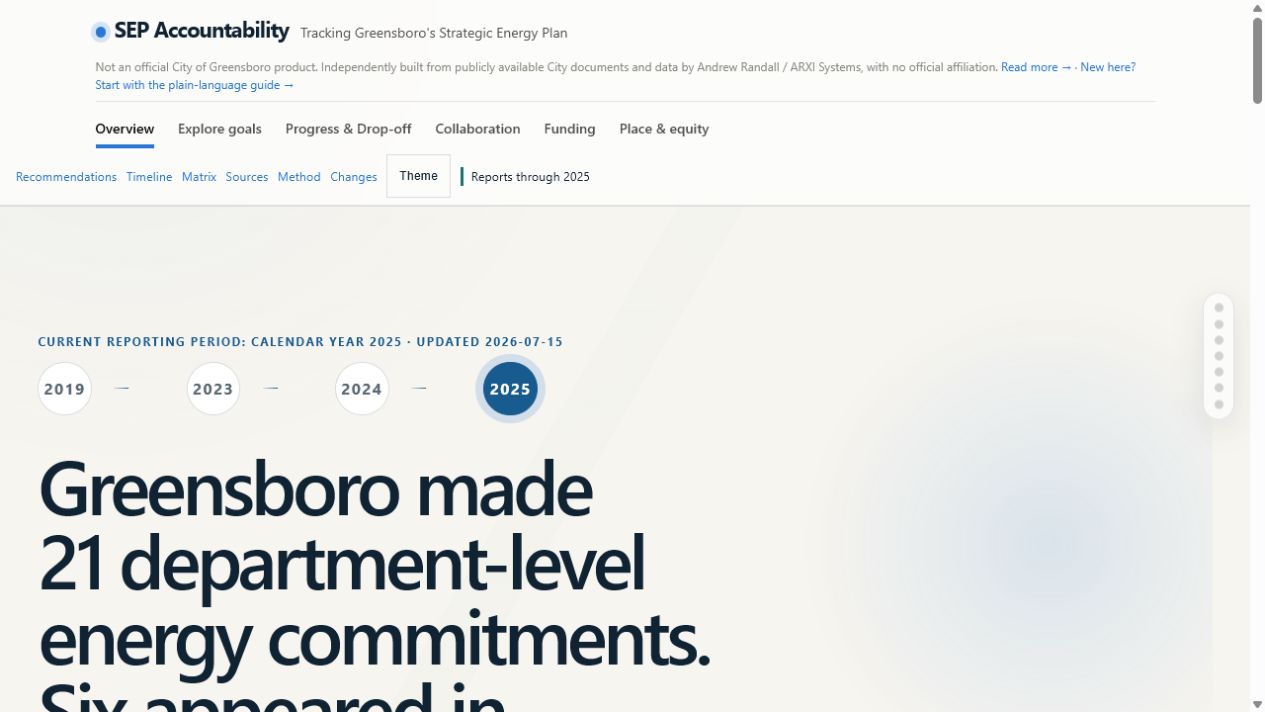
Current Greensboro SEP Tracker overview organizing the plan timeline, goal record, and reporting status
Public-sector systemsA living public record people can inspect.
In development / Active civic build

Greensboro SEP Tracker

Make long-term public progress easier to follow.

The problem
A long-term public plan, annual reports, funding records, votes, permits, and outside evidence were available, but answering “what changed?” still required substantial research.
What is working now
An active tracker matching 21 goals across three reporting years, with citations, reporting gaps, outside checks, collaboration views, and a sourced correction path.
Why it matters
Residents, board members, staff, and decision-makers can inspect a clearer record without manually rebuilding the history from separate documents.
What it proves
AKRD can structure scattered public evidence into a transparent reporting system while keeping source boundaries, uncertainty, privacy, and open work visible.

Useful for: agencies, boards, nonprofits, grant programs, and public-facing initiatives whose commitments and results accumulate across years and sources.

Civic-work boundary: Andrew serves on the Greensboro Community Sustainability Council. He developed this tracker independently; the board and City did not commission it, and it is not a paid AKRD client engagement.

Read the active-build storyDiscuss a similar project ↗
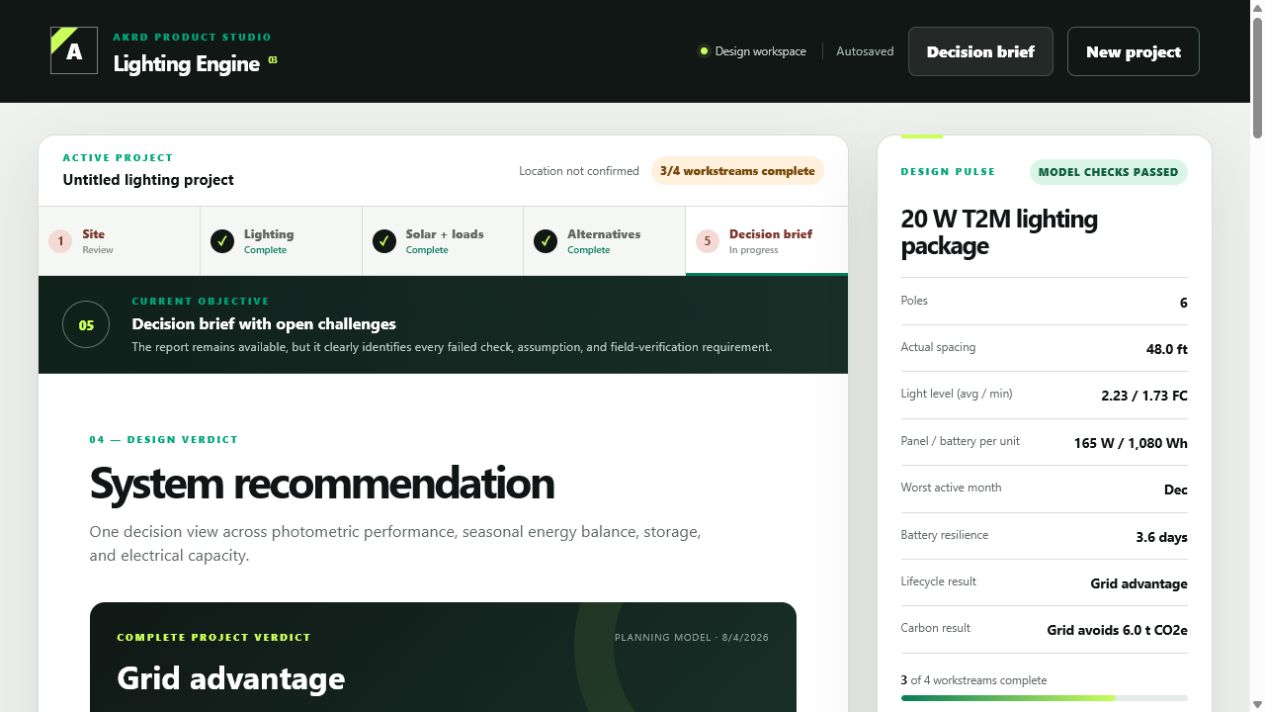
Lighting Engine decision brief separating lighting, energy, financial, and carbon tests in an illustrative scenario
Technical decision supportOne recommendation with the evidence still visible.
Private planning product / Illustrative scenario

AKRD Lighting Engine

Turn specialist knowledge into a decision buyers can inspect.

The problem
Lighting performance, seasonal energy, battery reserve, civil work, lifecycle cost, carbon, and evidence can be evaluated separately even though the buyer must approve one complete project.
What was built
A working planning product that carries the same site and operating context through measured lighting, energy, alternatives, sensitivity, evidence, and decision-brief screens.
Why it matters
Field solar experience showed that a promising component does not automatically prove the complete project. Buyers need the tradeoffs, assumptions, and limits in one understandable path.
What it proves
AKRD can convert technical expertise and commercial knowledge into a guided product that helps non-specialists evaluate a complex recommendation.

Useful for: technical manufacturers, infrastructure providers, engineering-adjacent teams, and businesses whose expertise is trapped in files, spreadsheets, calculators, or employee knowledge.

Planning boundary: this is an AKRD product, not a paid client engagement. Illustrative inputs show behavior, not customer results. It is not stamped engineering; final projects require manufacturer and qualified professional review.

Read the full case storyDiscuss a similar problem ↗

Not sure which story is closest?

Start with the problem, not the service label.

The free growth assessment helps identify whether the immediate constraint is market visibility, operating systems, public-sector readiness, or proof.

The footprint / 2021–2026

Under five years.
One national view.

Move from evaluated opportunities to confirmed customer projects, the contract paths behind them, and visible field delivery. The map keeps client identities private while making the scale of the work clear.

351Opportunities evaluated
39Markets reached
206Cities & regions
46Confirmed customer projects
Public-sector opportunity coverageNorth America
3D view unavailableUse the project list beside the map to explore the same information.

351 public-sector opportunities across 39 markets through 2026.

Height shows activityTaller markers represent more opportunities or stronger supporting documentation.

Color shows the current viewCyan marks evaluated opportunities, lime shows confirmed customer projects, violet tracks confirmed contract proof, and field colors identify project types.

Client confidentiality comes firstLocations are grouped and organization names remain private while the scale of experience stays visible.

Why the proof transfers

Your industry may be different. The operating problem may be familiar.

The church, business system, civic tracker, and lighting product are not presented as identical engagements. They show a consistent ability to understand a difficult situation, preserve the expertise inside it, and build a clearer path for the people who must decide what happens next.

01

Diagnose disconnected processes

Find the delays, missing context, unclear ownership, and repeated work hiding behind a visible symptom.

02

Organize specialized knowledge

Turn files, calculations, reports, and experienced judgment into a dependable structure people can reuse.

03

Translate technical information

Help non-specialists understand the decision without removing the evidence an expert needs to inspect.

04

Improve customer journeys

Make it easier for the right person to understand the offer, trust the capability, and choose a next step.

05

Build usable digital systems

Connect information and actions around the way the organization actually works instead of adding another isolated tool.

06

Create visible proof

Turn completed work, operating records, media, and outcomes into evidence that supports the next buyer conversation.

07

Support buying decisions

Organize requirements, risk, assumptions, alternatives, and value so a decision can move through review and procurement.

08

Connect strategy to execution

Carry the original goal into the workflow, deliverable, measurement plan, and next improvement.

You do not need to know which service to request. Bring the problem, the current process, and what a better outcome should make possible.

See how this could transfer to my business

Your next case story starts with the current constraint

What should become easier to understand, operate, prove, or buy?